

ABSTRACT
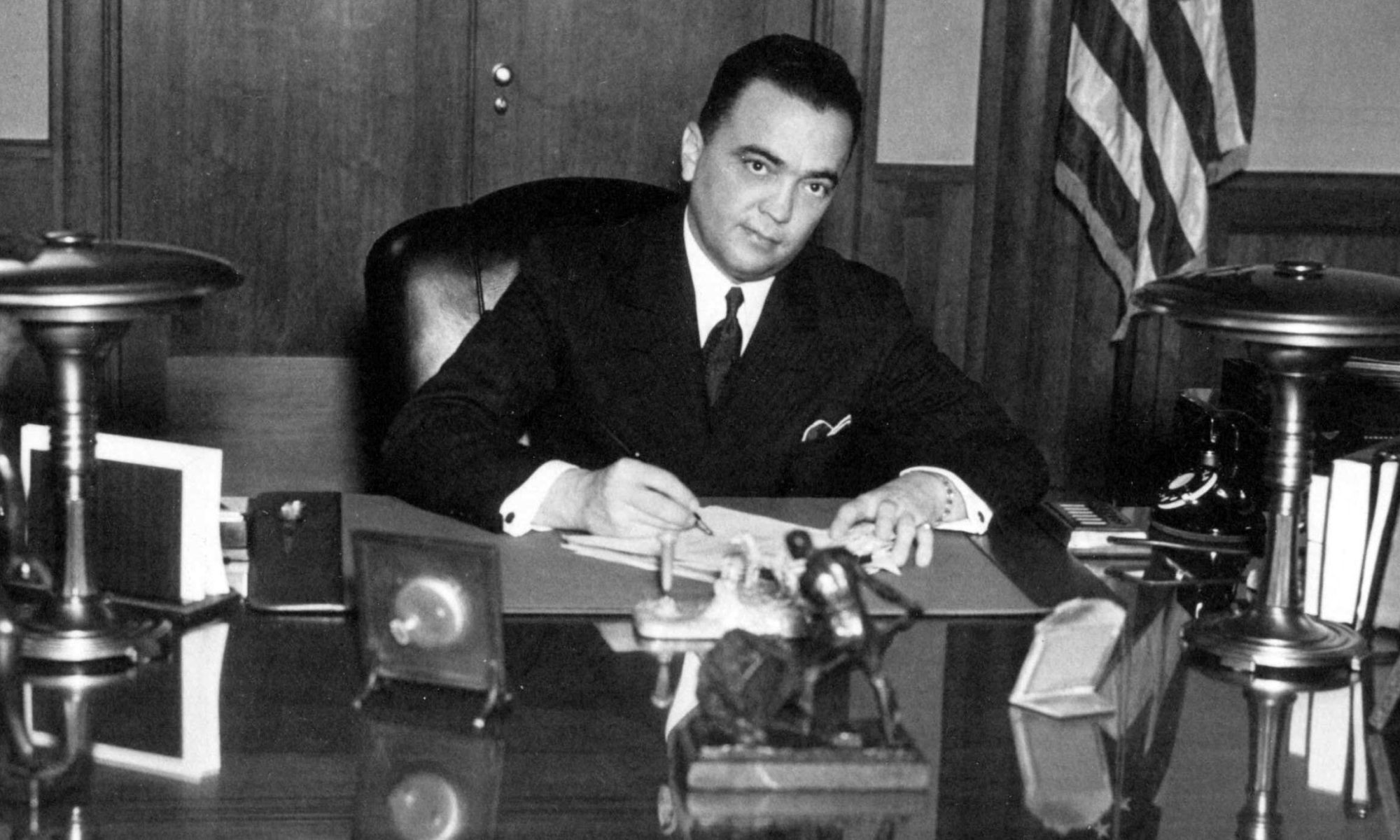
The FBI (Federal Bureau of Investigation) is an intelligent security and law enforcement organization for the United States that protects federal matters (relating to the entire government rather than individual states). The FBI is now well established and organized, but it wasn’t always this way. The FBI became involved in the criminal uprising of the 1930s as well as practically inventing forensic science and establishing laboratories around the US. FBI director J. Edgar Hoover worked with different special agents and associates to improve the efficiency of the organization, resembling the famous bureau that is known today.
Key Words: FBI, 1930s, Forensic Science, Crime
Annotated bibliography Report
FBI Beginnings
- FBI a brief history. (n.d.). FBI. https://www.fbi.gov/history/brief-history (From the FBI historical records archive)
A brief history is described and typed down on the FBI’s public website, a history on the very beginning of the FBI. In 1908, “Henry Ford’s Model T first began rolling off assembly lines in Motor City, making automobiles affordable to the masses and attractive commodities for thugs and hoodlums, who would soon begin buying or stealing them to elude authorities and move about the country on violent crime sprees”(5) As the nation industrialized and improved technology and efficiency wise crime increased and cities like New York struggled to contain the violence. Some order was severely needed, “there was hardly any systematic way of enforcing the law across this now broad landscape of America. Local communities and even some states had their own police forces, but at that time they were typically poorly trained, politically appointed, and underpaid”(7) America needed an intelligent and organized crime fighting organization.
One of the many problems that local police and the Secret Service dealt with was anarchy. The desire to take down any system of government and “bring power to the common man” arose, a warped and chaotic version of marxism. These anarchists, ironically enough, became the very first members of the Federal Bureau of Investigation. After a man named Charles Bonaparte, an Attorney General to president Roosavelt, brought together men from the Secret Service and his own special agents they created the FBI, its first mission to “conduct investigations for the Department of Justice”(18) During the first 15 years of its reign, the Bureau of Investigation was “a shadow of its future self” This was before J. Edgar Hoover and the Bureau still struggled to keep up with crime. But it was established and on its way to becoming something great.
“By 1915, Congress had increased Bureau personnel more than tenfold, from its original 34 to about 360 special agents and support personnel”(20) The FBI was growing despite its struggles with training and disciplining rogue agents. Investigations of the anarchists bombings in 1919-1920 brought a young investigative director named J. Edgar Hoover onto the scene. The investigation by Mitchell Palmer did not go well and they were considered poorly executed. But the FBI was just beginning to rise and Hoover hadn’t even stepped foot on the main stage yet.
- The rise of the FBI. (n.d.). PBS. https://www.pbs.org/wgbh/americanexperience/features/dillinger-rise-fbi/
PBS (Public Broadcasting System) explains J. Edgar Hoover’s involvement in the Rising of the FBI and how it impacted the operation of the organization. Hoover became Director of the Bureau in 1924 and he “continued his campaign to create a modern, professional force that combined scientific methods with advanced police skills”(4) he improved the training of new recruits and made getting into those trainings more difficult with requirements like Law school and education in the Forensic Sciences. This ultimately resulted in a stronger force with higher intelligence and greater strength and it caused the new special agents to have a better respect for their job, even though some complained about the science courses.
When John Dillinger (leader of a gang that acted violently against the public and authority) was killed by special agents, they gained immediate fame, encouraging the intimidating persona we know today. PBS recognizes the incredible fame that the public graced the Bureau with, “Due to the success of G-men and other FBI films, the public gave credit to the FBI alone. The agency became so popular that tourists requested tours of its Washington headquarters, particularly the crime laboratories and firing ranges”(9) with this interest the FBI thrived, with better funding, better training and better organization of this group of federal law enforcers.
On May, 18th, 1934, Roosevelt signed the bill that “lifted restrictions preventing federal agents from making arrests and carrying arms”(7). This gave more power to the individual special agent, allowing more time for investigation and less need for technicalities. Being able to carry firearms provided safety to the agent when tracking down a criminal. After all the improvements and experiences “The FBI was still officially an organ of the Justice Department, it functioned independently, and became known as the world’s largest, most modern national police force”(10).
Forensic Science
- Fox, J. F., Jr. (n.d.). The Birth of the FBI’s Technical Laboratory—1924 to 1935. FBI.gov. https://www.fbi.gov/history/history-publications-reports/the-birth-of-the-fbis-technical-laboratory1924-to-1935
- Mahan, S. (2016). 84 Years Ago Today, the FBI’s Crime Lab Opened in DC. Washingtonian. https://www.washingtonian.com/2016/11/24/the-fbi-opened-its-crime-lab-here-in-dc-back-in-1932/
The first source is from the FBI’s historical archives, specifically on the incorporation of Forensic Science in newly created Laboratories in Quantico, Virginia and Washington, DC. The second source goes into the creation of Washington’s Lab specifically, by the Washingtonian magazine. Some original aspects of science in crime solving are the handwriting analysis and typewriter identification. Aspects such as DNA matching and testing fingerprints had to be perfected and were used more frequently a while after 1910 (when fingerprinting was first used in a case). A case involving a homicide using poison was assigned to Special Agent Charles Appel, who was “the Bureau’s only scientist” and was trained in toxicology, used handwriting analysis and typewriter identification (which is matching a specific typewriter with its unique printed letters, and which is no longer used today) to solve the case. The FBI’s “Technical Crime Laboratory had been in operation for little more than a year. Its official birthday was set as November 24, 1932”(3)
1932 is when Forensic science was first incorporated into the FBI with the help of Appel and the encouragement of Hoover. Hoover kept his eye on “The latest developments in the field of scientific crime detection” and he became interested in “fingerprint identification matters, especially those dealing with the discovery of latent fingerprints”(4) (latent fingerprints are the semi-permanent transfer of oils from ones palm or fingertip to another surface for identification) This encouragement by the Director set the FBI Forensic Sciences team on a train towards the future and further discovery to aid criminal investigations. Further branches of science moved out from the root of ‘Forensic Science’ into fields like Forensic Pathology, Forensic Engineer, Forensic Psychology, etc. After realizing how useful Science was in the criminal investigations “the Bureau included expert lecturers on subjects like the use of the comparison of handwritings, the comparison of typewritings, the taking of fingerprints, the classification of fingerprints, moulage, ballistics and similar technical criminological subjects”(5) now a requirement for becoming a special agent is being well versed in Forensic Sciences.
- Waggoner, K. (Ed.). (2007, October). The FBI Laboratory: 75 Years of Forensic
Science Service. FBI.gov. https://archives.fbi.gov/archives/about-us/lab/
forensic-science-communications/fsc/oct2007/research
This is another article from the FBI’s public website, specifically about the impact of Forensic Science on the organization. It again emphasizes Hoover’s interest in the matter and briefly explains his encouragement and contributions. It also goes over Charles Appel’s research and expertise. At the time (1920’s) the Bureau did not have many resources, they especially did not have the staff or space for an organized department. Some staff did not even stay with the Bureau because “Outside experts were hired on a case-by-case basis”(2) This method obviously could not last, especially financially. So after the St. Valentine’s Day Massacre in 1929, involving Al Capone and other criminals, the FBI established “the Scientific Crime Detection Laboratory at Northwestern University in Chicago”(3)
The Laboratory that was once in DC moved around until finally “the Laboratory moved to a dedicated, state-of-the-art facility on the Marine Corps Base in Quantico, Virginia, where it stands today”(9) Quantico is now famous as the setting for many books and movies involving the FBI, including The Silence of The Lambs. The Lindbergh kidnapping was one of the first cases that the FBI used Forensic science on. The baby by the name of Charles A. Lindberg was found partially decomposed after the ransom note written by the killer went unanswered. Many suspects were collected and matched for handwriting similarities between theirs and the kidnappers. The FBI brought in Bruno Richard Hauptmann, “Appel then was able to compare Hauptmann’s handwriting with the ransom notes and link him to the crime. The local police department also determined that the wood used to fashion the ladder the kidnapper had used to climb into the baby’s bedroom had come from Hauptmann’s attic”(12) Hauptmann was then punished for his crimes. With these kidnapping cases the FBI perfected their talents in Science and frequently discovered the values of such a field in crime.
Crime in the 1930s
- **’G’- Men, movie of 1935, directed by William Keighley.
- Crime in the Great Depression. (2018, March 8). HISTORY. Retrieved August 27, 2018, from https://www.history.com/topics/great-depression/crime-in-the-great-depression
The first source is a 1935 film, made just after the establishment of the Bureaus Lab and after the bill was passed allowing special agents to carry arms and make arrests. The film demonstrates the struggles of the FBI during a time where crime was rampant and the T model ford vehicle made getting away from the law easy and affordable. The movie shows this dynamic in the very beginning as an agent lectures to a class about “The start of the FBI”, “Do you realize that not many years ago a fleeing kidnapper or bank robber could take one step across the state line and thumb his nose at us?”(00.49) Only in 1934 were agents allowed to carry guns and make arrests, before that the job was much more dangerous.
In the 1930s the great depression was just starting, the fast-growing economy that was thriving in the 20s seemed to dissipate as banks lost money and therefore the community lost money. The History Channel gives some background information about the crime in this time period. The crime that the Bureau would have to deal with. After alcohol became illegal, an opportunity arose for gangsters and other criminals, “The passage of the 18th Amendment and the introduction of Prohibition in 1920 fueled the rise of organized crime, with gangsters growing rich on profits from bootleg liquor”(2) Prohibition was a large reason for the growing crime in the late 1920’s and early 1930’s. Bank robbing and murder became more and more popular alongside bootlegging. Some criminal names that are recognized for crime in this time period are Lucky Luciano, Bonnie and Clyde, Al Capone and George “Machine Gun” Kelly.
The public seemed to be drowning in the lawlessness of New York City and around the U.S. and the people needed a larger law enforcer than just the local and state police, The FBI, the end of prohibition and the slow of immigration all contributed to the dropping rates of crime within 1934-37. Homicide rates “dropped 20 percent”(13) As the 1935 movie states, “The state police cannot combat these criminals, neither can city police, the law prohibits them from pursuing criminals across the state line. Now with the automobile and the aeroplane these gangs can get from state to state in just a few hours” so it makes sense that crime would drop during 1934 because of the FBI’s ability to fight back with equal power. The FBI played a part in capturing Al Capone and setting an order to the chaos, of course making drinking legal again helped immensely.

